
Find Your True Max Heart Rate (and Why the Formula Lies)
Here is a number a lot of runners trust without question: 220 minus your age.
It is supposed to be your maximum heart rate. For most people, it is wrong, and often by a lot.
I have seen 40-year-olds with a true max near 165 and others up at 195. The formula hands them both 180.
Build your training on a number like that, and you can spend months running too hard or too easy without ever knowing which.
Why max heart rate matters at all

Your maximum heart rate is the ceiling. Once you know it, you can set honest training zones: easy down low, steady in the middle, hard up near the top.
But here is the part most articles bury: on most days you do not need a number at all. Effort tells you what you need to know. Talk in full sentences and you are easy; gasp for air and you are hard. (More on running your easy days by feel.)
The max-heart-rate test is for the day you want precision, or for setting your zones once so your watch stops lying to you.
Why the formula lies
The “220 minus age” rule was never careful science.
It is a rough average pulled from a small, dated sample, and the spread between real people is wide.
Two runners the same age can have maximums 20 or 30 beats apart. That is not a rounding error. That is the gap between an easy run and a hard one.
A training zone is only as honest as the maximum it is built on. Guess the ceiling, and every zone underneath it is a guess too.
The honest way: a step test
If you want your real number, you have to go find it, and that means a hard, rising effort until your heart rate simply will not climb any higher.
Read this first. A maximal test is genuinely strenuous. Get your doctor’s clearance before you try it, especially if you are over 40, carry any heart or health condition, or are coming back after a long layoff. This is general information, not medical advice. If there is any doubt, skip the test and train by effort. Nobody ever got hurt running easy.
If you are cleared and want to do it, a treadmill keeps it controlled. Warm up well, then climb in steps:
- Start at an easy walk, around 2 mph at a 2 percent grade, for three minutes.
- Every three minutes, raise the effort a notch: a little faster, a little steeper (say 3 mph / 4 percent, then 4 mph / 6 percent, then 5 mph / 8 percent, then hold the speed and lift the grade to 10, then 12 percent).
- Keep going, raising the effort every three minutes, until your heart rate stops rising no matter how hard you push, or you cannot continue.
- The highest number your heart reaches is your true maximum. Note it, then walk easy until your breathing settles.
Do not grip the rails to stay on. If you have to hold on, the effort is past honest, and it is time to stop.
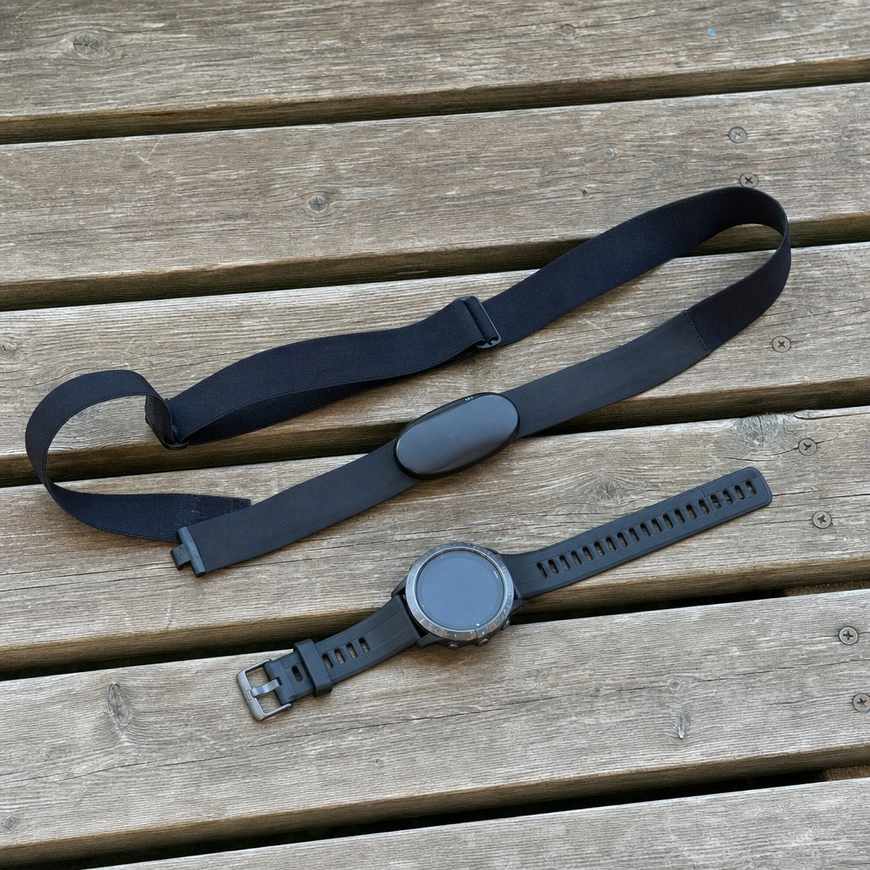
A chest-strap monitor reads more reliably than a wrist at high effort, so wear one for the test if you can.
The simpler test for everyone else
Most runners, most of the time, are better served by effort than by a max test they will do once and never repeat.
An old coach of mine called it the opera test. If you can sing, you are going too slow. If you cannot get a sentence out, you are going too hard. Speak a sentence but do not sing, and you are right where easy training lives.
It costs nothing, it needs no clearance, and it goes with you on every run.
What to do with your number
Once you have a real maximum, you can anchor your zones.
A solid rule of thumb for building durable aerobic fitness is to spend most of your running near 70 percent of your true max, easy enough to hold a conversation.
Then fold it into a simple weekly routine: mostly easy, a little hard, repeated for years.
Know your real ceiling, then mostly forget it and run by feel. That is how you train honestly, stay healthy, and keep running for a very long time.