
Strength Training for Runners (and Why It Matters More With Age)
Most runners think of strength training as something the faster, more serious athletes do.
That is backwards.
Strength work is most important for the runners who want to still be running in ten and twenty years. That is exactly who this site is for.
Why runners need more than running
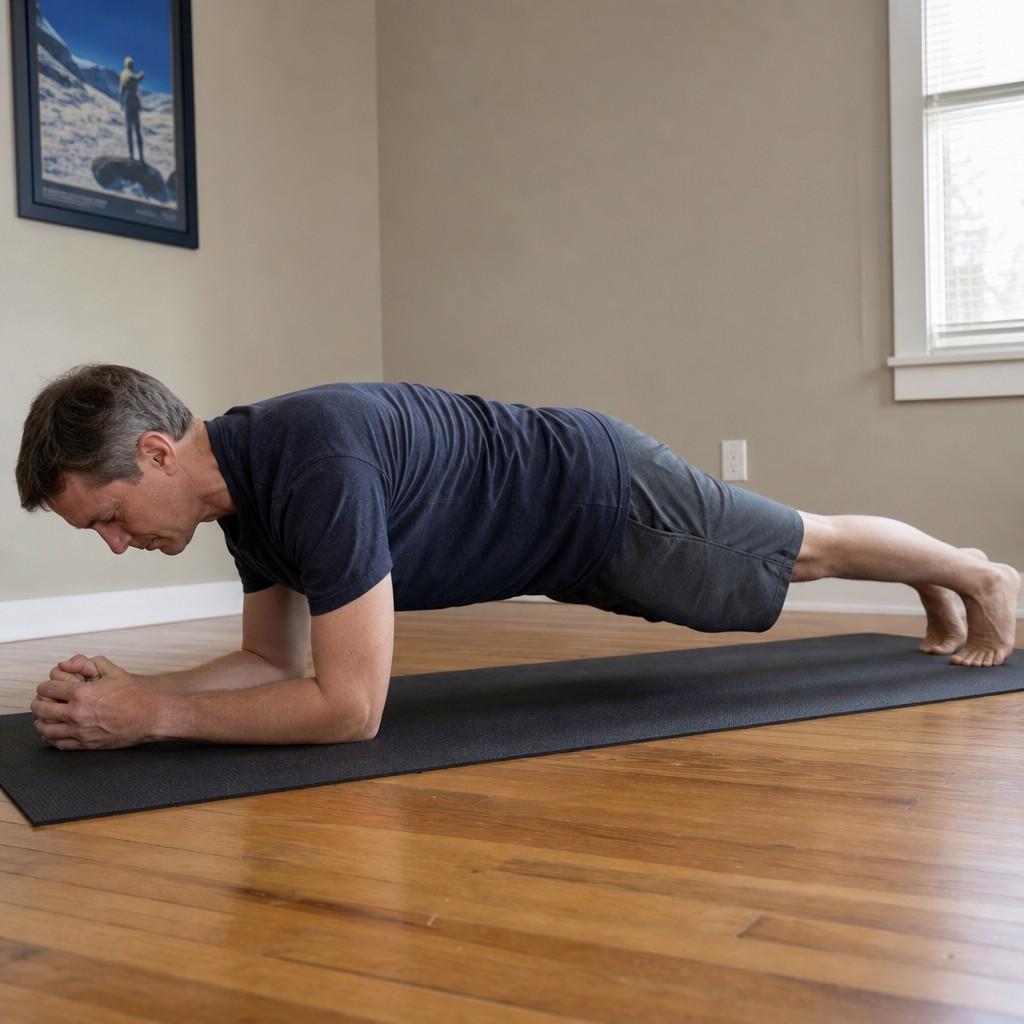
Running builds great cardiovascular fitness. It does not build much muscle, and it does not build balanced muscle.
Over time, you can develop strong quads and weak hamstrings, a strong stride and a weak core, legs that can cover miles but a body that gives out on you in other ways.
A little consistent strength work fills those gaps.
Strength and mobility protect the runner. Running alone won’t keep you durable as the years add up.
Here is what the research supports. The American College of Sports Medicine has consistently pointed to resistance training as one of the most effective ways adults can maintain muscle mass and functional strength as they age. The less muscle you carry into your 50s, 60s, and beyond, the harder it is to keep running with good form and without breaking down. Holding onto muscle as you get older is one of the best things you can do to keep running for life.
That is not a small point. It is the whole argument for strength work.
Three reasons to start now
Strength training cuts your injury risk.
Most running injuries are not bad luck. They are the result of a weak link somewhere in the chain: an underpowered hip, a tight hamstring that cannot handle the load, a lower back that has been sitting at a desk for decades. Strengthen those links and they stop breaking.
Strength training improves your running economy.
When your legs are stronger, each stride takes less effort. You use less energy to hold your pace. That effect compounds as you age and your body has less margin to absorb sloppy form.
Strength training keeps you running.
This is the one most people overlook. The runners who stay at it through their 50s, 60s, and beyond are usually not the ones who only ran. They kept a gym habit, or a home routine, or a few simple exercises they did consistently. Running is the sport, but strength is part of what makes you durable enough to keep doing it.
The back and hamstring connection
Let me take a common runner complaint and trace it to its root.
Lower back pain is widespread. Most people treat it as a back problem. Often, it is a hamstring problem that is showing up in the back.
Running develops the quadriceps well. It does far less for the hamstrings. After enough miles, many runners are carrying a meaningful imbalance: the front of the thigh is strong, the back is underpowered. That gap puts stress on the hips and lower back that accumulates over months and years.
Tight hamstrings also pull on the lumbar region. You may notice the back feels stiff or “iffy” when the hamstrings have not been worked in a few days.
The fix is not just to strengthen the back. It is to lengthen and strengthen the hamstrings so the whole system is balanced.
Gentle hamstring stretches done daily, including before you get out of bed in the morning, can make a real difference for chronic lower back stiffness. A few minutes lying in bed, pulling one knee at a time toward your chest and holding a long leg stretch, is a simple place to start. Consistency matters more than intensity here. Missing a few days often brings the stiffness back.
This is general training information, not medical advice. If you have ongoing back pain or a diagnosed condition, check with your doctor before changing your routine.
Balanced legs: quads and hamstrings
Here is a rough benchmark worth knowing.
Your hamstrings should be able to generate roughly half the force of your quads. If you can handle significant weight on a leg extension, your hamstring curl should be somewhere in that neighborhood proportionally. Most runners who have never done targeted leg work are nowhere close to that ratio.
That imbalance is where cramps and muscle pulls come from. The quads dominate, the hamstrings get overstretched on a hard downhill or a fast finish, and something goes wrong.
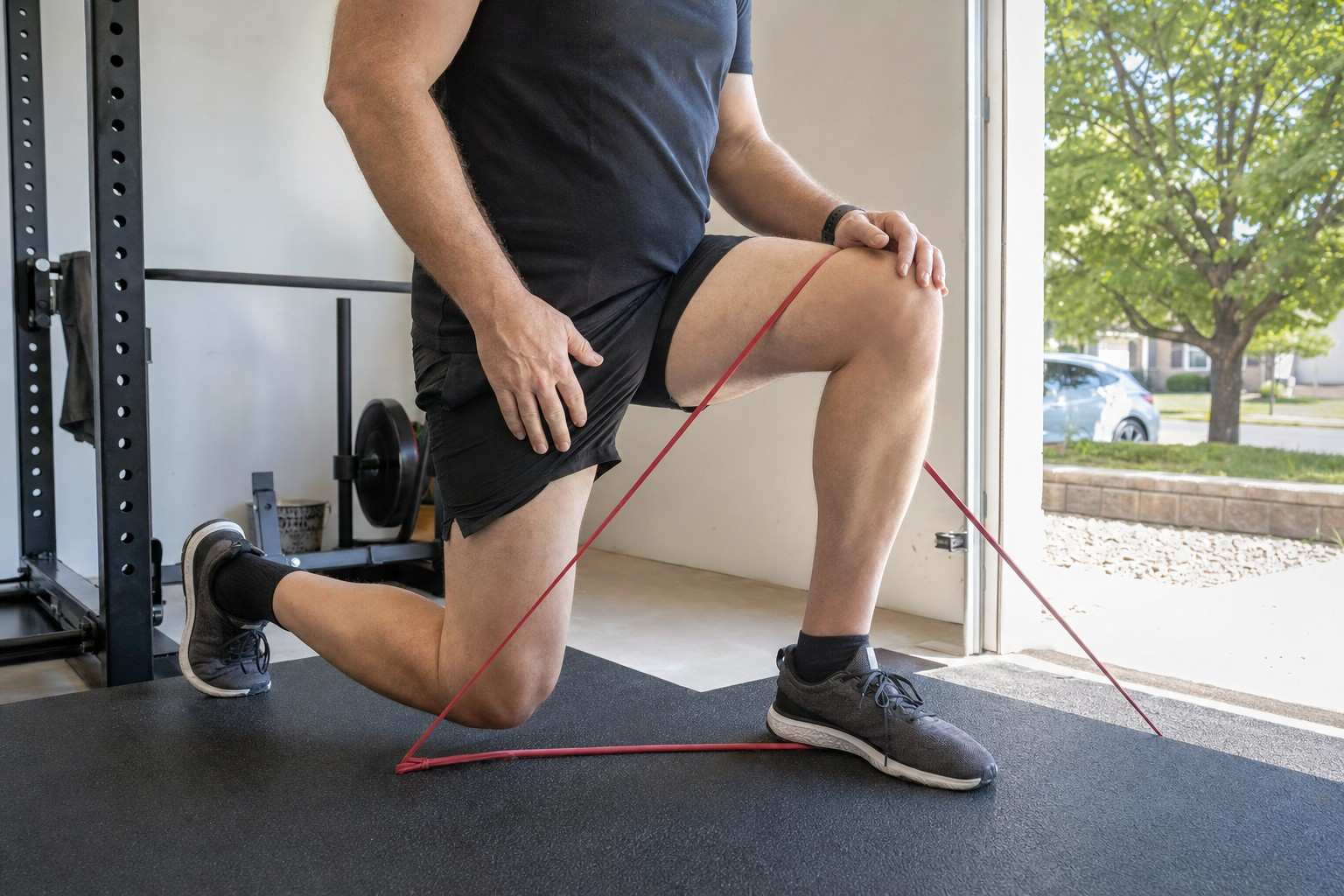
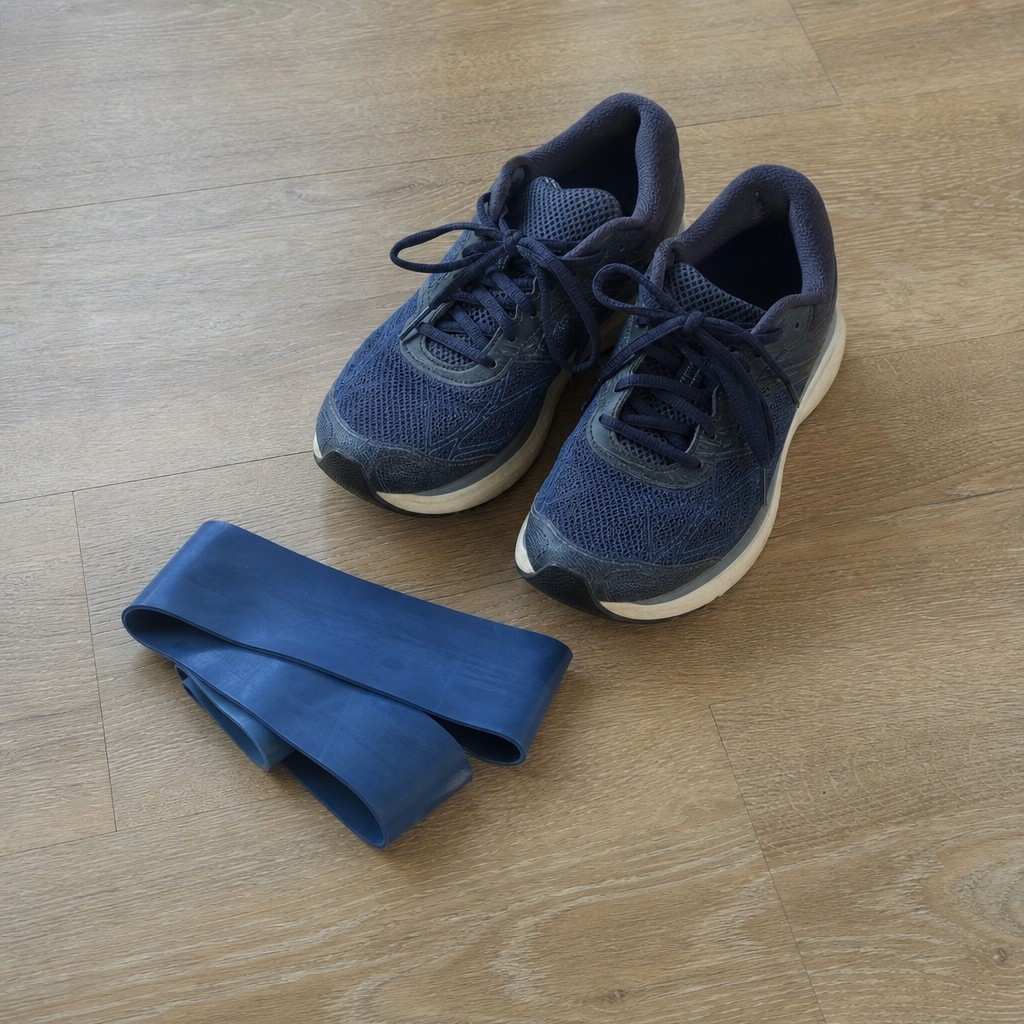
You do not need a gym full of machines to address this. Resistance bands, bodyweight exercises, and simple movements like Romanian deadlifts and hamstring curls hit the same muscles. If you want to put together a basic resistance-band routine, you can compare resistance bands on Amazon, which are inexpensive and work fine for the kind of routine most runners need.
Whole-body balance
Running uses the legs, but it taxes the whole body.
Your arms drive the stride. Your core holds your form when you are tired. Your upper back keeps your posture from collapsing at mile eight.
A balanced body runs more efficiently and breaks down less.
You do not need to lift like a powerlifter. You need the basic structural strength that running alone cannot give you.
Two or three sessions a week of 20 to 30 minutes each is enough for most runners:
- Squats and lunges for the legs
- Hip bridges and deadlifts for the glutes and hamstrings
- A few core movements for the middle
Keep the weights moderate, the form honest, and the habit consistent.
The age angle
I want to be direct about this.
If you are in your 40s and you have been running without any strength work, right now is the best time to add it.
The returns on muscle maintenance are not dramatic year to year. They are enormous decade to decade.
The runners I have seen keep going into their 60s and beyond almost all had some form of strength habit alongside their running. Not because they were gifted athletes, but because they were smart ones.
They understood that running is the goal, and everything else is in service of that goal.
This is one of the things I talk about when people ask about running after 50. The fitness is there to be had. The body responds to training at any age. But the work has to include more than just miles.
Putting it into practice
You do not have to overhaul your entire schedule.
Start with two sessions a week. Pick three or four movements that target the hamstrings, glutes, core, and upper back. Do them after an easy run or on an off day. Keep it short enough that you will actually do it.
Then fold the runs and the strength work into a weekly routine that you can repeat. Consistency over months and years is what builds the durable runner.
Strength work is not the opposite of running. It is what keeps you running. Start simple, stay consistent, and your body will pay you back for it.