
Is Running Bad for Your Knees After 50?
Ask around and you will hear it as settled fact: running wrecks your knees, and after 50 you are asking for a knee replacement.
It is one of the most repeated ideas in fitness. It is also, for most people, backwards.
What the research actually found

A large review in 2017 pooled 25 studies and more than 125,000 people, comparing knee and hip arthritis between runners and non-runners.
The result is worth reading twice:
- Recreational runners had arthritis rates of about 3.5 percent.
- Sedentary, non-running people came in around 10.2 percent.
- Competitive, high-mileage runners were higher, near 13 percent.
Read that middle line again. The people who did not run had nearly three times the arthritis of those who ran for fun. Sitting still was not the safe choice. It was the riskier one.
The risk to your knees was never running. For most people, it was not running.
The catch is in that third number. Very high mileage and hard competitive training is a different stress than easy recreational running. The lesson is not “more is better.” It is that sensible, regular running sits in a sweet spot, and that sweet spot is wide.
Why moving helps a joint
It feels backwards that the pounding of a run could protect a knee. But cartilage is not a tire that wears out by the mile.
Joints are living tissue. They are fed and kept healthy by movement: the gentle load of each stride pushes fluid through the cartilage and signals the whole structure to stay strong.
Take the load away entirely, and the joint does not last longer. It gets weaker.
That is why the runners in the data had healthier knees, not in spite of the running, but partly because of it.
“But is it too late to start, or to keep going?”
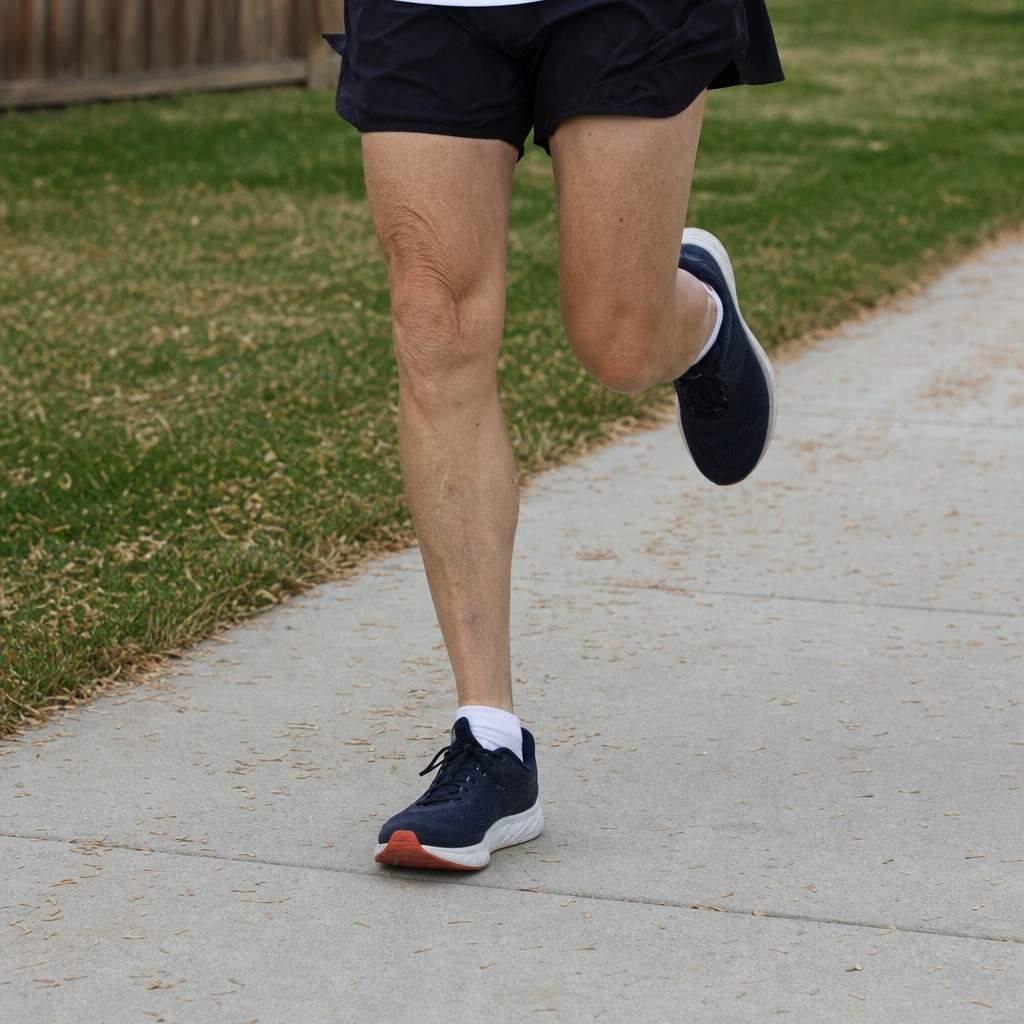
This is the quieter fear behind the knee question. You are over 50, maybe returning after years away, and you wonder if the window has closed.
It has not.
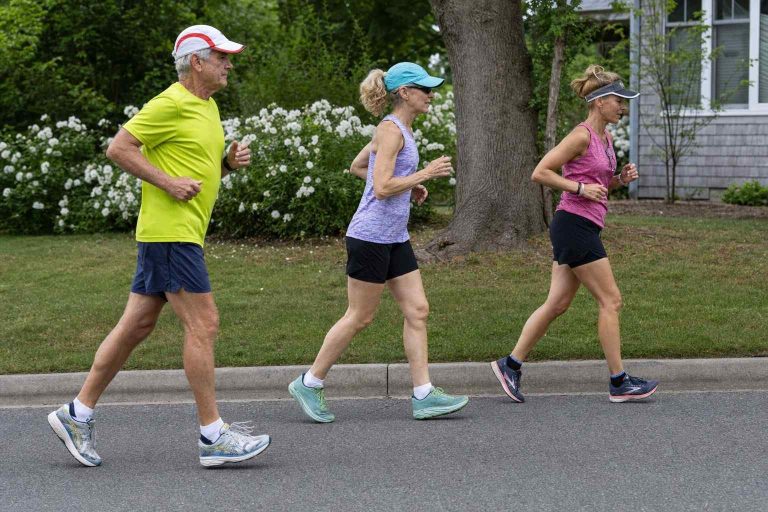
The body responds to training at any age. Older runners get fitter, stronger, and more durable when they train sensibly, the same way younger ones do. You may not set lifetime bests, but age changes how you train, not whether you can. Plenty of people run their happiest, healthiest miles in their 50s, 60s, and well beyond.
The part that should change your mind
Here is the bigger picture, beyond the knees.
A 2020 review in the British Journal of Sports Medicine pooled 14 studies and more than 230,000 people. Runners had a 27 percent lower risk of dying during the studies from any cause, with lower rates of heart disease and cancer death as well.
And you did not have to run much to get it. As little as 50 minutes of running a week was linked to real benefit. This is not a sport you survive. Done sensibly, it is one that helps you live longer and better.
How to keep your knees happy after 50
So the fear is mostly wrong. That does not mean anything goes. Knees get unhappy when runners make the same handful of mistakes:
- Too much, too soon. Nearly every running injury traces back to a jump in mileage or intensity the body was not ready for. Build slowly.
- Running every run hard. The fix is the boring one: keep easy days genuinely easy, and the body absorbs the work instead of breaking down.
- Skipping strength. Strong legs and hips protect a knee more than any shoe. A little strength training for runners goes a long way as the years add up.
- Ignoring real pain. Normal training aches ease as you warm up. Sharp, pinpoint, or one-sided pain that worsens is a signal to back off and get it checked.
If you are coming back after a long time off, you do not have to run continuously from day one. Easing in with a walk-and-run approach builds you up without taking all the pounding at once.
This is general training information, not medical advice. If you have a knee condition, ongoing pain, or any doubt, check with your doctor before ramping up.
The bottom line
You do not lose the right to run as you get older. You earn the need to train a little smarter: more easy miles, a bit of strength, more patience on the way back.
Do that, and running is not the thing that wears you out. It is one of the better bets you can make on staying strong, mobile, and independent for a very long time.
Train to run forever. The research is on your side.