Why Rest Days Make You a Better Runner
Type-A runners hate this one.
You put in the miles. You show up when the weather is bad and your legs are heavy.
Stopping feels like giving up.
Rest days are not giving up. They are the mechanism.
What the run actually does

Here is the part that flips the picture: running does not make you fitter. It creates the conditions for fitness to happen.
A hard run, or even a steady easy run, stresses the muscles, connective tissue, and cardiovascular system. That stress is the signal. The adaptation, the actual getting-stronger part, happens after the run, when your body repairs and rebuilds.
Skip the rest, and you keep piling stress on top of incomplete recovery.
That is not more training. That is just more damage.
Fitness is built during recovery. The run is the trigger. Rest is where the change happens.
This is why two runners can put in the same weekly miles and get very different results. The one sleeping well and resting deliberately is rebuilding consistently.
The one grinding through every day is chipping away at a foundation that never fully sets.
The signs you need more rest
Sometimes the body is loud about it. Sometimes it just goes quiet.
Watch for these:
- Fatigue that does not go away with sleep. Feeling tired after a hard workout is normal. Still feeling it two or three days later means recovery is behind.
- Morning heart rate running higher than usual. A few beats above your normal resting rate, for no obvious reason, is a reliable early signal. Your body is still working.
- Sleep is poor, even when you are tired. Overtraining and under-recovery can disrupt sleep quality. It is one of the stranger signs, because rest seems like it should help you sleep better.
- Mood goes flat or irritable. This one catches people off guard, but the pattern is consistent: a runner who is not recovering well often feels low, unmotivated, or easily frustrated before the physical signs show up.
- Niggles that won’t clear. A tight calf, a tender Achilles, a hip that’s been “a little off” for two weeks. These are not injuries yet, but they are the warning lights. Rest while they are small is far cheaper than rest after they become real problems.
This is general training information, not medical advice. If something is persistently painful or you are not sure what is going on, check with your doctor before continuing to train through it.
Most of these signs respond to one thing: more rest, and especially more sleep.
Active recovery beats the couch

Rest day does not have to mean horizontal.
An easy 20-minute walk moves blood through tired muscles without adding stress. A short walk is often better recovery than lying still all day.
It keeps things loose, clears some metabolic debris, and honestly makes the next run feel better.
The key word is easy. Not a “recovery jog” that turns into tempo pace because the legs woke up and started chatting. Not a strength session that leaves you sore.
A walk, some light mobility work, a stretch. Movement with no agenda.
If you are building a simple weekly routine, build the rest days in explicitly rather than treating them as gaps between the runs you care about.
Sleep is the real recovery tool
No supplement, no ice bath, no compression sock does what seven to nine hours of sleep does for a runner.
During deep sleep, the body releases growth hormone, repairs muscle tissue, and consolidates the neural patterns that make movement more efficient. Cut sleep short and you are doing the most expensive possible damage to your recovery budget.
This is the area where most runners have the most room to improve, and where the gains are least visible in a training log.
You will not see “slept 8.5 hours” showing up as a PR, but you will feel it in how your easy runs start to feel genuinely easy again.
Aim for a consistent bedtime before hard training days more than after them.
The preparation for tomorrow’s quality run starts the night before.
When coming back is harder than expected
Sometimes a week off turns into a month. Life, illness, a niggle that needed real rest.
It happens to everyone.
Coming back after a longer break is not a sign of failure. The trick is starting slower than your ego wants, because the lungs and motivation come back faster than the legs and connective tissue do.
If you have been off long enough to feel like you are starting over, treat yourself like a returner. The work you did before is not gone. It comes back faster than it took to build the first time. For a detailed look at how to structure that return, coming back after a break covers the approach step by step.
You are not rebuilding from zero. You are rebuilding from experience. That is a different thing entirely.
Rest is what keeps you running for years
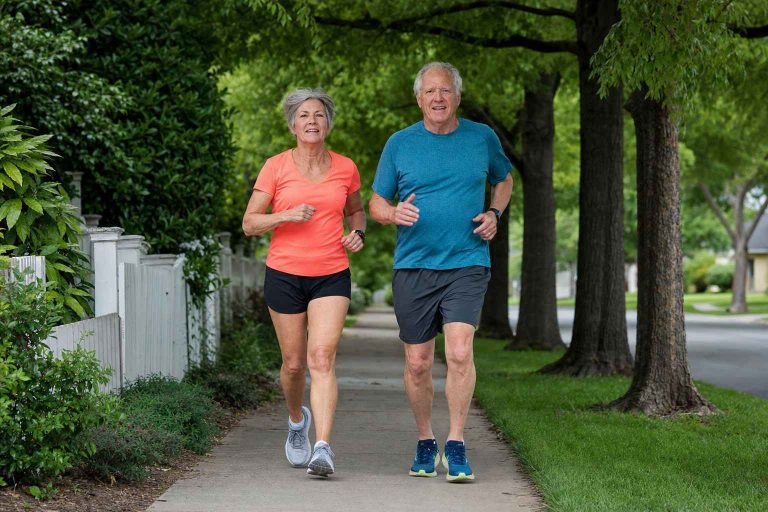
This is the part that matters most for anyone who wants to be running at 60, 65, or well beyond.
The runners who are still going at those ages are almost never the ones who trained the hardest in their 40s.
They are the ones who trained consistently and recovered deliberately. They ran their easy days easy, took their rest days seriously, and did not try to shortcut the process.
Consistency beats intensity. And consistency requires recovery.
A few hard weeks followed by a forced break from injury is not consistent training. It is a cycle that grinds people down and eventually ends their running.
Rest days, built in on purpose, are what break that cycle.
Every rest day you take is a deposit in the account that pays for decades of running. The goal is not to run as much as possible this week. The goal is to still be running in ten and twenty years.
Take the rest day. It is exactly where the work happens.