Trail Running: Let Gravity Work for You
Most runners get trail running exactly backwards.
They attack the uphills and brake the downhills, spending all their energy in the wrong places. It’s the most common pattern you’ll see at any trail race, from a 5K to an ultra.
Flip it around and the whole thing gets easier and faster.
The downhill is where trail running is won and lost
On a road race, the flat stretches decide the pace. On a trail, the descents do.
Running downhill on trails puts real stress on the quads and knees. That is not a reason to slow to a shuffle. It is a reason to learn the skill, because runners who fight the downhill waste energy they could be banking.
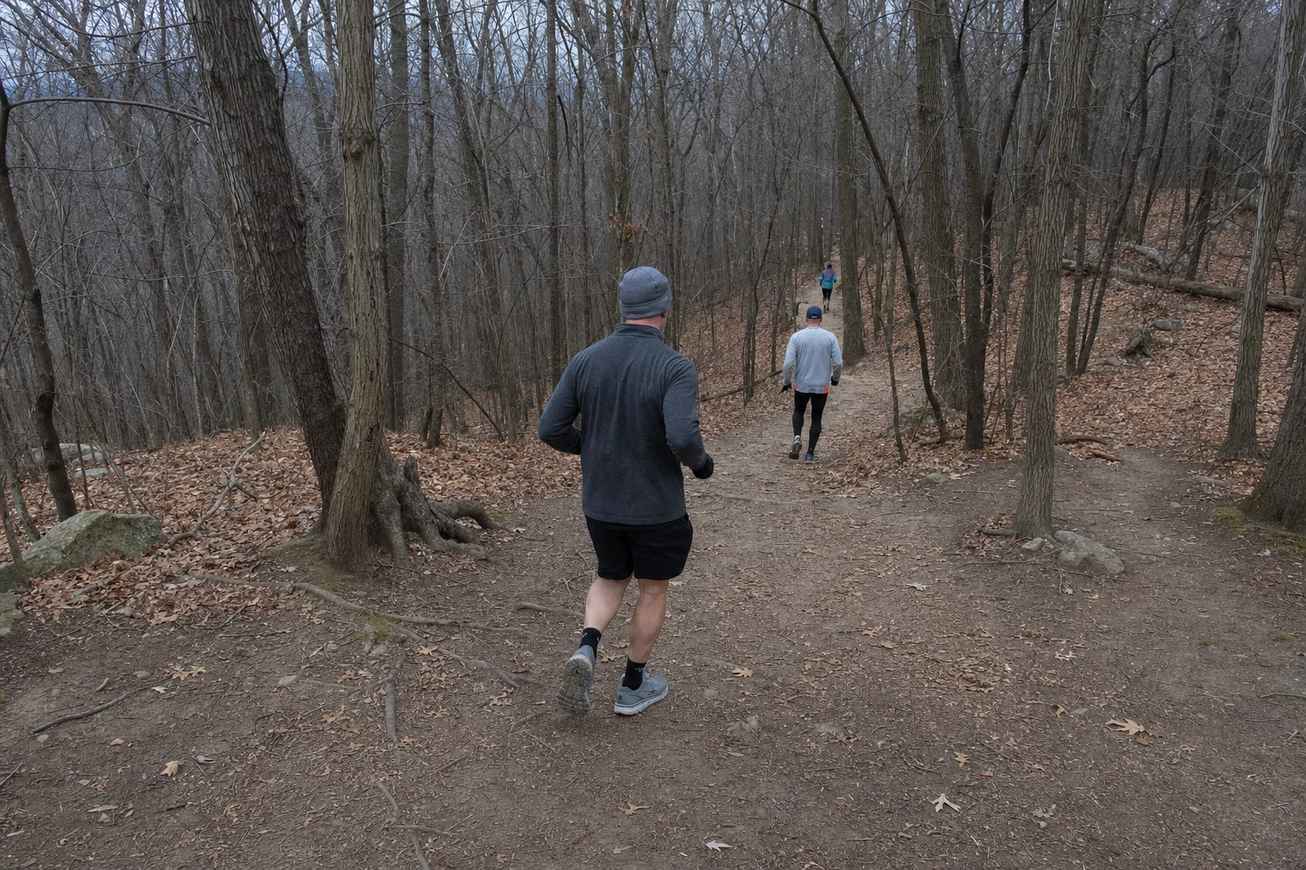
The key idea is simple: let gravity pull you. Don’t brake, don’t lean back, don’t fight it. Let the hill do the work.
You can’t fool Mother Nature. On those downhill stretches, gravity is free speed. Take it.
When you lean back and stiff-leg a descent, you pound your knees with every step. When you lean slightly forward and relax into the hill, your feet land softer and your stride flows.
It takes practice. Start on gentle graded trails before you try anything steep.
Shorten your stride on technical ground
Here is the technical adjustment that makes the biggest difference on trails.
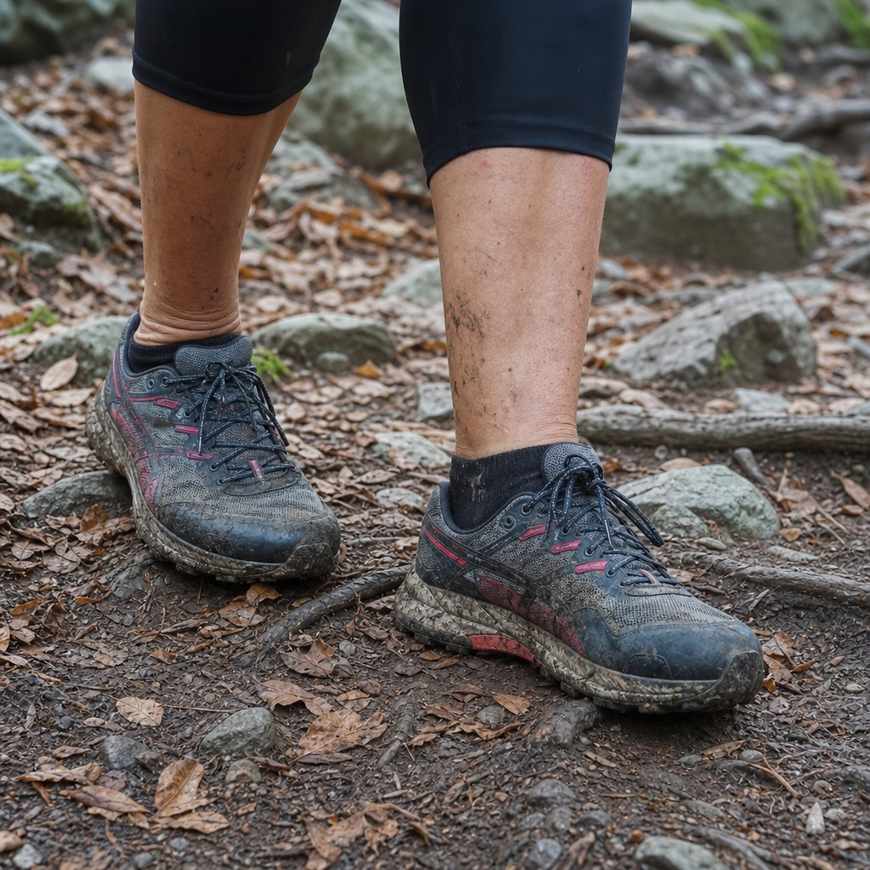
On pavement, a long, open stride works fine. On roots, rocks, and uneven surfaces, a shorter, quicker stride gives you time to react. You can adjust your foot placement between steps. A long stride commits you to landing wherever it lands.
Think of it as shifting gears rather than losing speed.
- Shorter steps over roots and rocks. More contact points, less committed to any one landing.
- Quick turnover on technical sections. The feet move, the brain adjusts, the body follows.
- Open up on the smooth stretches. When the trail flattens and clears, run it the way you would a road.
The runners who look smooth on trails are not gifted athletes. They have learned to read the ground a few strides ahead and adjust their stride length to match.
Work with the terrain, not against it
A trail run is not a road run on uneven ground. The pace changes constantly, and that is the point.
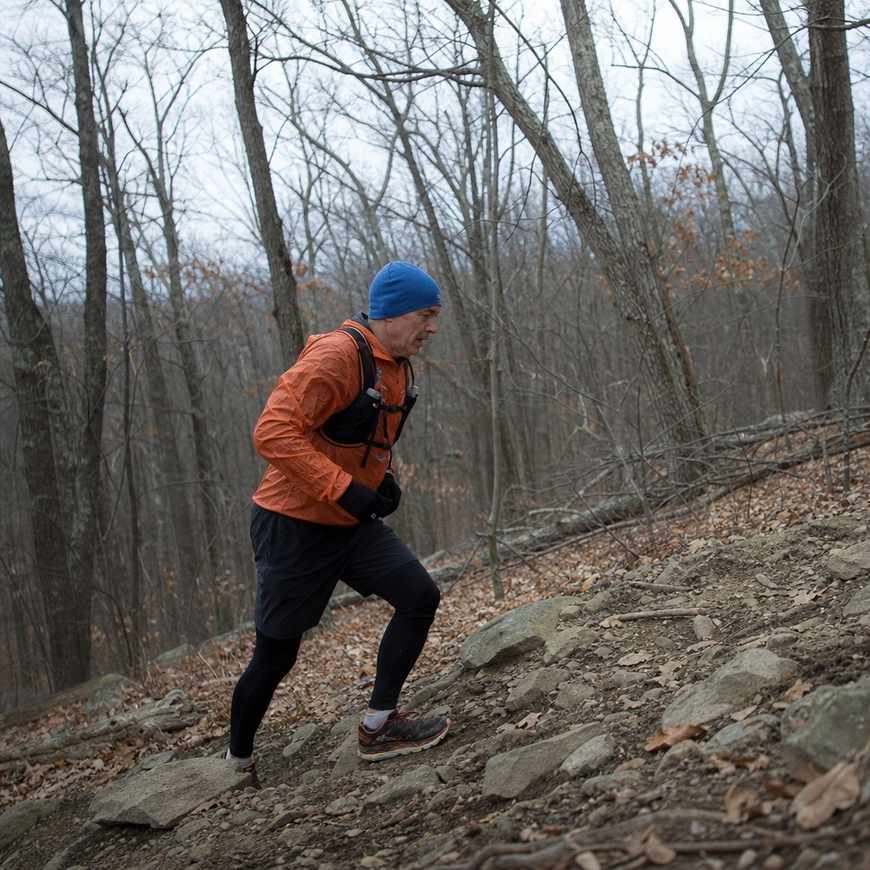
Stop trying to hold a steady pace on trails. Your effort should be steady; your pace will not be.
A climb will slow you to a shuffle. A steep downhill opens you up. A rocky section shrinks your stride; a soft dirt path invites you to run loose. Let the terrain set the pace and focus on keeping the effort consistent.
This is also why trail running transfers well into a weekly routine. The varied effort, different muscle demands, and lower perceived intensity on easy trail days give your legs a different kind of work.
How to find trails if you do not live near them
Most city runners can find more trail than they think.
Parks, greenways, and creek paths count. Even a grassy hillside with some grade is useful for getting your legs used to uneven ground. You are training the ankles and the attention, not just the lungs.
Some city runners use multi-level parking garages for hill work. Running the ramps up and down is a legitimate substitute when nothing else is available. It is not the same as a forested trail, but it does prepare the quads for the pounding, which is the relevant adaptation.
If you live in flat country, even rolling terrain changes the effort profile enough to be worthwhile. A 30-foot rise in a park is not nothing.
Race day: the smart pattern
Preparing for a trail race follows the same logic as any race of similar distance, with one addition: specific hill work in the weeks before.
On race day, run a specific pattern:
- Uphills: back off. Jog slowly, even walk. Most runners charge the uphills and blow up by mile three. The hill will cost you less if you take it conservatively.
- Flats: run them. This is where you recover and bank time.
- Downhills: let them run. Relax into the descent, lean slightly forward, and take the free speed.
You will pass people on the downhills this way. Plenty of them.
The same principle applies to training. Hard effort on the climbs, easy effort on the recovery sections, run the flats. Save the legs for where they matter.
Build into it gradually
If trail running is new to you, the ankle stability and quad load are different from road running.
Start on easier, less technical trails. Give the ankles time to adapt to the uneven surface. The small stabilizing muscles in the lower legs get a workout they are not used to, and a twisted ankle in week one sets you back further than a slow start would.
A few trail runs a month folded into your regular training is enough to build the skills. You do not need to run trails exclusively; you need to run them often enough to get comfortable.
Train to run forever. The goal is still to be on the trails in ten years, not just this season.