
How Fast Should Your Easy Runs Be?
Most runners run their easy days too hard.
Then they wonder why they’re always a little tired, a little flat, and a little stuck at the same fitness for years.
The fix is almost insulting in its simplicity: on easy days, slow down. Not a little. A lot.
Easy days easy, hard days hard

I see the same pattern in runner after runner. The easy runs come out a touch too fast, and the hard runs come out a touch too slow. Everything bunches up in a tiring middle that builds very little.
The runners who keep going for decades do the opposite. They make the easy days genuinely easy, which leaves them fresh enough to make the hard days genuinely hard.
Easy days build the engine. Hard days sharpen it. The tiring middle mostly just wears you down.
That split is the whole game. Get it right and you can train more, recover better, and stay in the sport for the long haul.
What “easy” should actually feel like
Easy means conversational. Running next to a friend, you could hold up your end of the chat in full sentences without gasping.
A few ways to know you’re in the right zone:
- The talk test. You can speak in full sentences. If you can only get a few words out, you’re working too hard.
- Your breathing. Steady and quiet, not heaving.
- Your effort. It should feel almost too easy, like you’re holding back. That feeling is correct.
An old coach of mine put it in singing terms. If you can belt out a verse, you’re loafing. If you can’t get a sentence out, you’re racing. Talking but not singing is your easy run.
“But it feels too slow to be doing anything”

This is the part people hate. A true easy run can feel slow enough to be embarrassing.
Run it anyway.
The benefit isn’t in the pace. It’s in the time spent moving at a low, sustainable effort, and that is what builds the aerobic base, the durable plumbing that lets you run for years. Slow running is not junk running. It is the foundation everything else sits on.
Your ego will tell you to speed up. Your ego is not training for the long run. You are.
Where heart rate fits
If you like numbers, a heart-rate monitor keeps you honest, because it is hard to fake an easy effort when the number is staring back at you.
The common guidance is to keep easy runs in the lower zones, well under your maximum. The catch is that the usual “220 minus your age” formula is often wildly off for any one person, so a zone built on it can push you too hard or too easy. It pays to know your real maximum heart rate before you trust the zones.
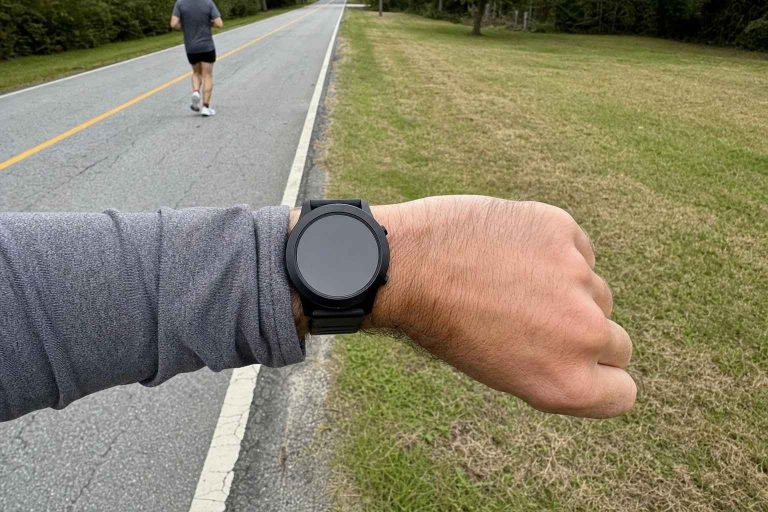
If you would rather not stare at a wrist, a simple chest strap is enough to learn what easy feels like for a few weeks, and then you can run by feel. A monitor is a teacher, not a leash. You can compare heart-rate monitor watches on Amazon if you want a place to start.
Heart rate here is general guidance, not medical advice. If you have a heart condition or you are coming back from a long layoff, clear it with your doctor first.
How much easy, how much hard
For most runners who want to keep running for life, the large majority of weekly running should be easy. One, maybe two, harder sessions a week is plenty.
That ratio surprises people. It shouldn’t. The easy miles are not filler around the “real” training. They are the real training. The hard days are the seasoning.
To put this into a week without overthinking it, a simple weekly routine does most of the work for you.
The payoff
Run your easy days easy and a few things happen. You recover faster. You pick up fewer little injuries. You start to look forward to running, because most of your runs feel good instead of grim.
And you keep going. That is the entire point.
Train to run forever, not to win Tuesday. Slow down on the easy days, and the easy days will carry you a very long way.